Zombies Aren't Real Wiki › Evac corridor
Zombies Aren't Real corridor guide
Put the end of every Zombies Aren't Real corridor on a gate: the Evac Corridor (key Q) walks civilians along the streets to its far end, and they enter a safe zone only through a gate standing there. A corridor costs $30 plus the ground it covers. It is one of the evac tools in Jogamedev's horde-defense strategy game, with Holds and Broadcast.
-
Civilians walk to the corridor's end and go through only if a gate stands there.
-
$30 per corridor plus $7 per hectare of ground under its arrow.
-
Drag for length, mouse wheel for width. A wider corridor costs more.
-
Calm civilians gather in the inner circle. The outer ring shows how far the Hold reaches.
-
A Civic building set to Broadcast calls calm civilians in at a run, to a gate in reach.
How the Zombies Aren't Real corridor works
A calm civilian inside an evac corridor follows the arrow along the streets, around buildings and through a safe zone gate at the far end. A civilian who panics can break away from the route.
When civilians find a gate on their own
These distances apply to civilians outside all safe zones, while the gate stands and the zone behind it is intact.
- Calm, within a 60 m walk of a gate. Civilians start walking in on their own. Choose a gate they can reach along the streets.
- Panicked, within 150 m of a gate. Civilians run for it if the route leads away from danger. They can pass up a gate that would send them back toward the zombies.
- Fleeing and blocked, with a gate within 500 m. When a building or wall gets in the way, civilians turn around the obstacle on the side toward the nearest gate.
Drawing a corridor to a gate
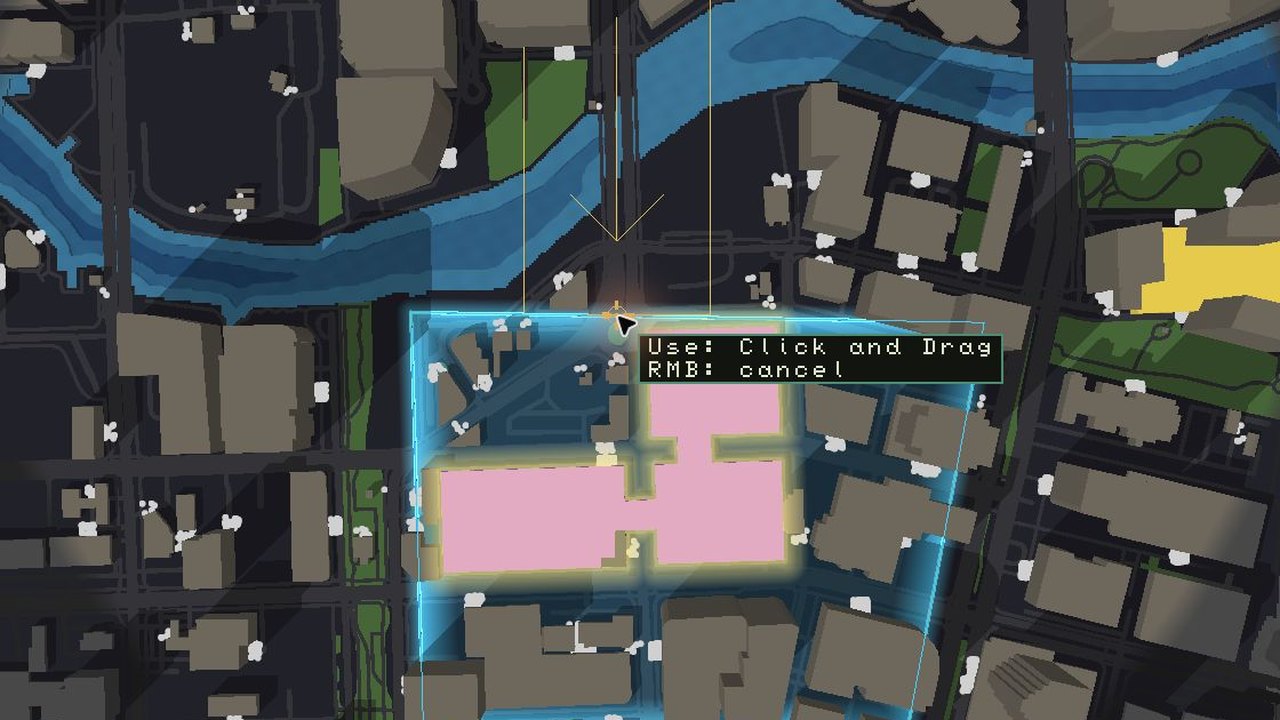
In planning, select Evac Corridor and drag from the crowd to the gate. The tail and arrowhead both need to be inside the play area. Put the arrowhead on the opening in the wall.
Width
Use the mouse wheel while dragging to fit the strip to the crowd. A wider strip picks up civilians on adjacent streets and adds to the area you pay for.
Scrolling before you start a corridor made no difference in our Miami tries: the new corridor came out as wide as the existing one.
Refund and REFUND ALL
Select a misplaced corridor or Hold and press X during planning to get its price back. REFUND ALL clears your planning placements. Once the outbreak starts, removing a route gives no refund.
Follow the street inside the corridor
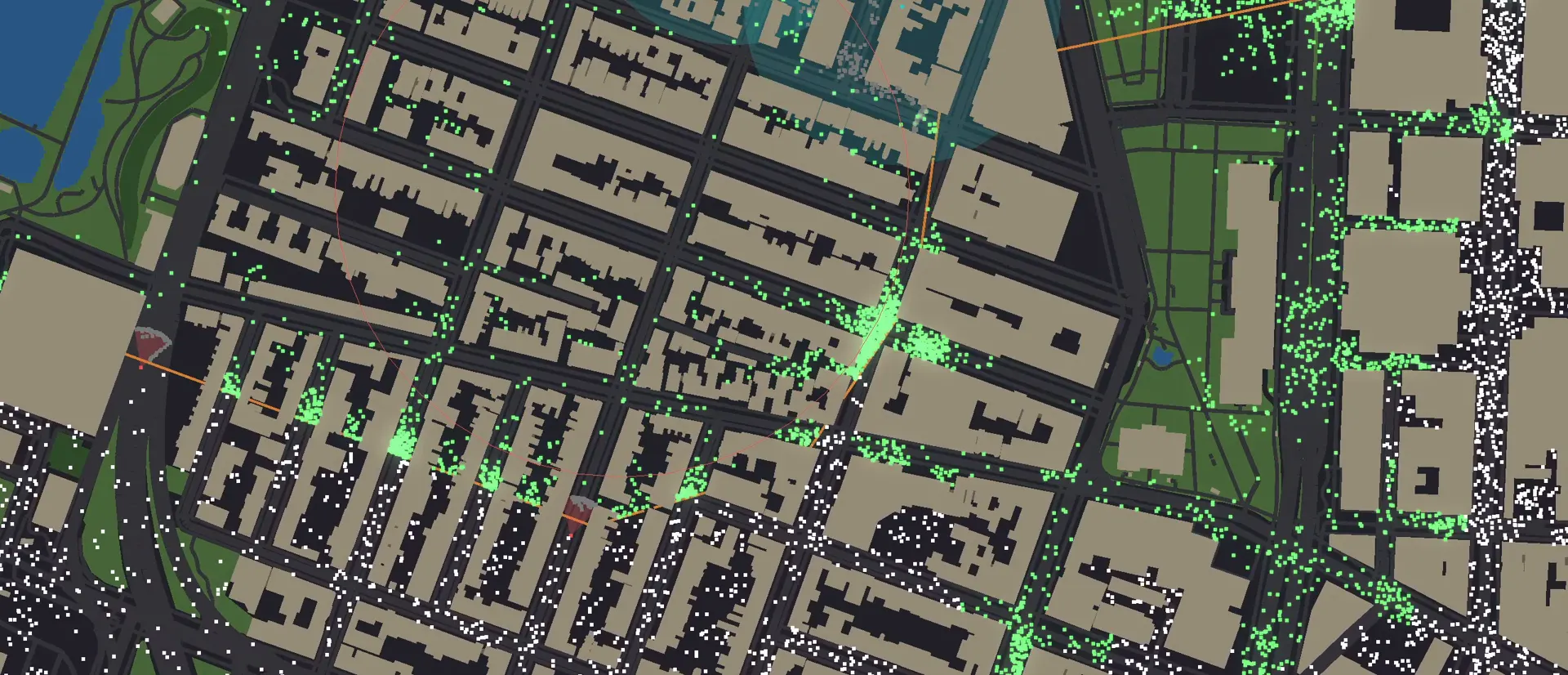
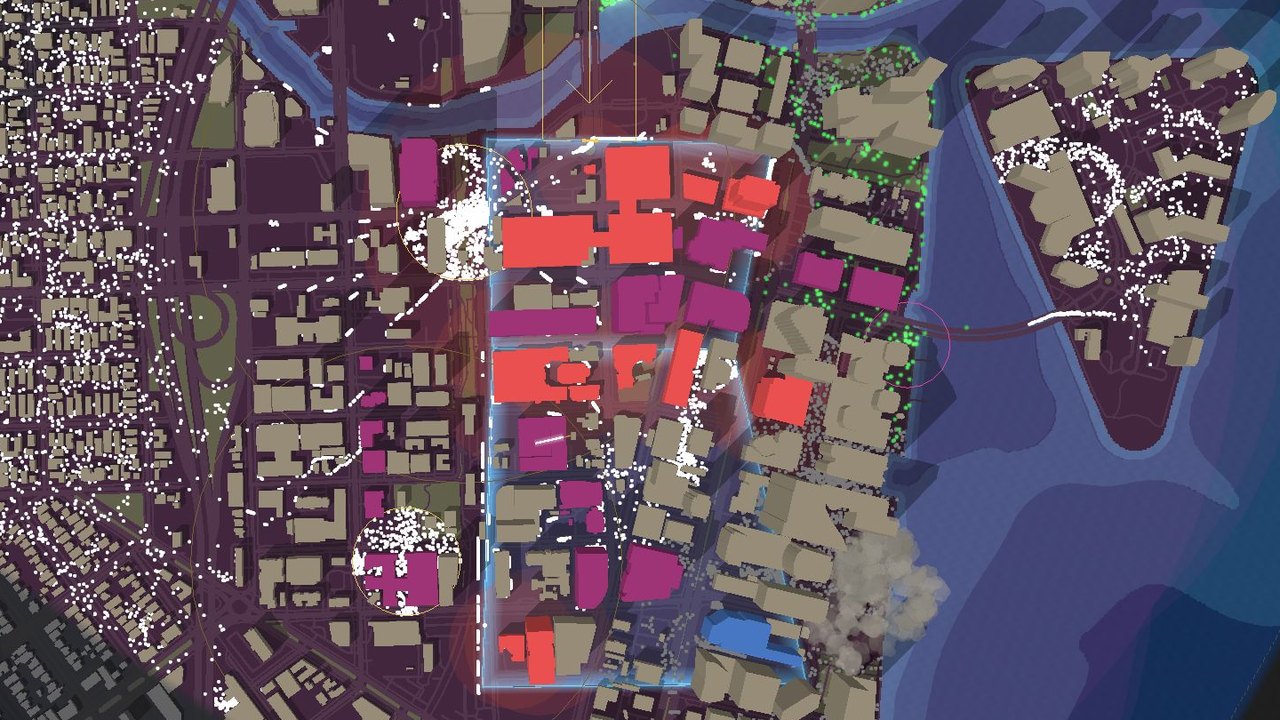
In our Boston 2 run, the corridor crossed rooftops on its way to the north gate. The white dots turned at street corners inside the corridor. When you line up a corridor across a river, trace the road over the bridge and on to the gate. A straight arrow over water still needs a crossing civilians can walk.
How much a corridor costs
Each corridor costs $30 to place, plus $7 per hectare (10,000 m²). To price a corridor, multiply its length by its width to get the area. At the default width of 150 m, the prices work out as follows.
- 300 m long. The corridor covers 45,000 m² (4.5 ha). The ground costs $31.50, for a total of $61.50.
- 1 km long. The corridor covers 150,000 m² (15 ha). The ground costs $105, for a total of $135.
Corridor prices on the HUD
In our Miami 1 run, we drew a corridor to the north gate, refunded it and drew a shorter one to the same gate. The HUD charged whole dollars. At default width, the roughly 377 m corridor cost $70 and the roughly 300 m corridor cost $62. We estimated each corridor length from its width at the same zoom.
Our short Boston 4 corridor cost $46 for about 150 m. If cash is tight, look for a junction close to the gate where several streets feed into one corridor.
Hold circles and Broadcast
How far a Hold reaches
Drag from the center to set the inner circle's radius. Calm civilians inside the outer ring walk toward the center and stay in the inner circle until they panic. The outer ring reaches four times as far as the radius you draw.
A Hold costs $3.20 per meter of inner radius, up to a radius of 200 m. A 50 m Hold costs $160 and draws calm civilians from up to 200 m away.
When to use Broadcast
If the crowd is spread across several streets, choose Broadcast on a Civic building inside a safe zone. Calm civilians within its reach who are still outside all zones head for a gate they can reach, or toward the building if no gate is in range.
Check the building's reach ring. Its radius grows with the stage's land area, from 600 m on small stages to 1,500 m on large ones. Outside a zone, civilians within that ring move at 23.4 m/s, even if they panic. Militia is a separate Civic ability that arms some nearby civilians when the zone is breached.
Why civilians get stuck or miss the gate
- The crowd stops at the wall. Follow the corridor arrow to its tip and check that it meets a standing gate. In co-op, check who can place a gate in that wall.
- A calm crowd ignores a Hold. Leave a gap between the Hold and nearby corridors. On 17 November the developer confirmed that a corridor touching a Hold could cancel its pull.
- Civilians pace at the arrowhead or get trapped inside a building. The 16 November update fixed crowds pacing at the end of a corridor with no zombies nearby, and Holds pushing civilians into buildings. Check your game version if you see either.
A Hold beside a wall with no gate
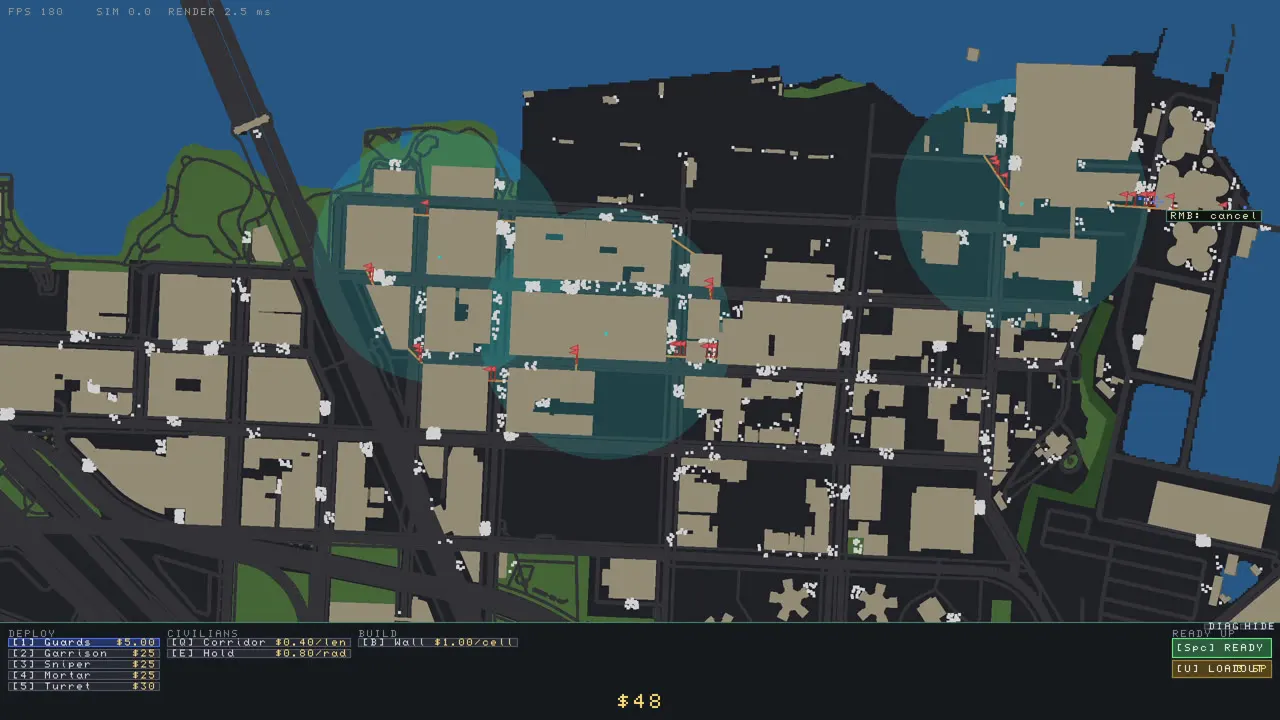
In our Miami 2 run, the southern Hold outside the west wall was within Broadcast range. Civilians gathered in both Holds, and some lined up along the gateless west wall. At the same time, civilians passed through the north gate where the bridge corridor ended.
Questions
- Do civilians move faster inside a corridor?
Yes. A calm civilian in a corridor moves at their own fleeing speed, so the arrow gets people moving before they sense danger.
Comments
Site
No comments yet. Ask a question or share what worked in your runs.